
In the chapter on the 1970s in Maine at 200, I write about the last log drive down the Kennebec River. Making a cameo in that chapter is the steamer Katahdin, known familiarly as the Kate. I write, “For years the Kate had towed rafts of logs across Moosehead Lake to the dam at the East Branch of the Kennebec. A 110-foot relic from a time when a small fleet of steamships plied Moosehead’s waters, the Kate was launched in 1914 at Bath Iron Works and hauled by rail in sections to the lake, where she carried passengers for the Coburn Steamship Company. When the Hollingsworth & Whitney Company bought the Katahdin in 1942 she began her lumber work. In October 1975 she towed a raft of 180,000 cords to the East Outlet so they could begin their voyage down the river to the Scott Mill in Winslow, 85 miles away, in the spring. It was the start of the last log drive.”
The Katahdin had started her career at Moosehead when there was a huge luxury hotel at Mount Kineo and steamers would transport wealthy guests up the lake from Greenville. Sometimes her work was not so pleasant. In May 1928 nine men from Brockton, Massachusetts, and their guide drowned when their boat sank on the way to Kineo. The Katahdin was drafted to drag the lake for the bodies and raise the wrecked boat.
I first became acquainted with the Katahdin in the 1970s when she was still doing logging work. My parents bought a small camp near Greenville, on the road leading from Greenville Junction toward Big Squaw Mountain. In the summers we spent a lot of time on the lake, swimming, waterskiing, and just tooling around in the family boat. The Kate was a regular presence on the water, and as we played, we would sometimes see her at work towing huge rafts of logs across Moosehead. Every fall she got hauled up on land on a point just outside the junction. She would spend her winters there, landlocked, and return to the lake each spring.
Once her duties hauling timber ended, she resumed her role as a passenger vessel and became the centerpiece of the Moosehead Marine Museum. Spruced up (she received $432,000 in hull and keel work in 2012, part of the ongoing effort to keep her afloat and functioning), she takes tourists out on trips around Moosehead from spring to fall and now endures her winters tied to her dock in Greenville. A couple of summers ago she had an engine fire and her crew had to bring her dockside without power, but she has been repaired and has returned to her duties.
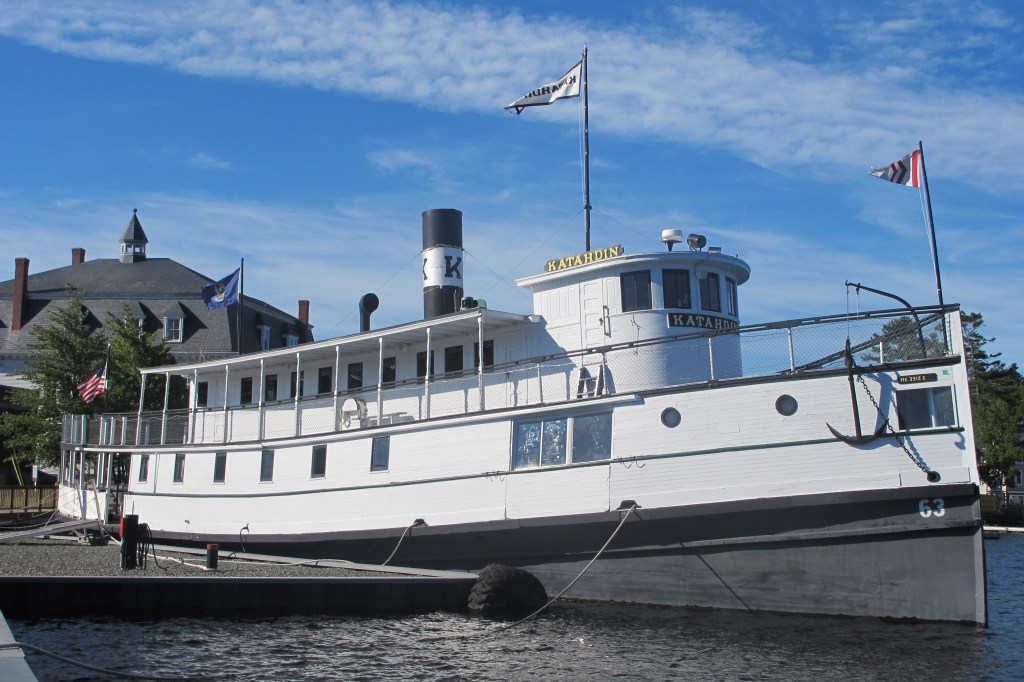
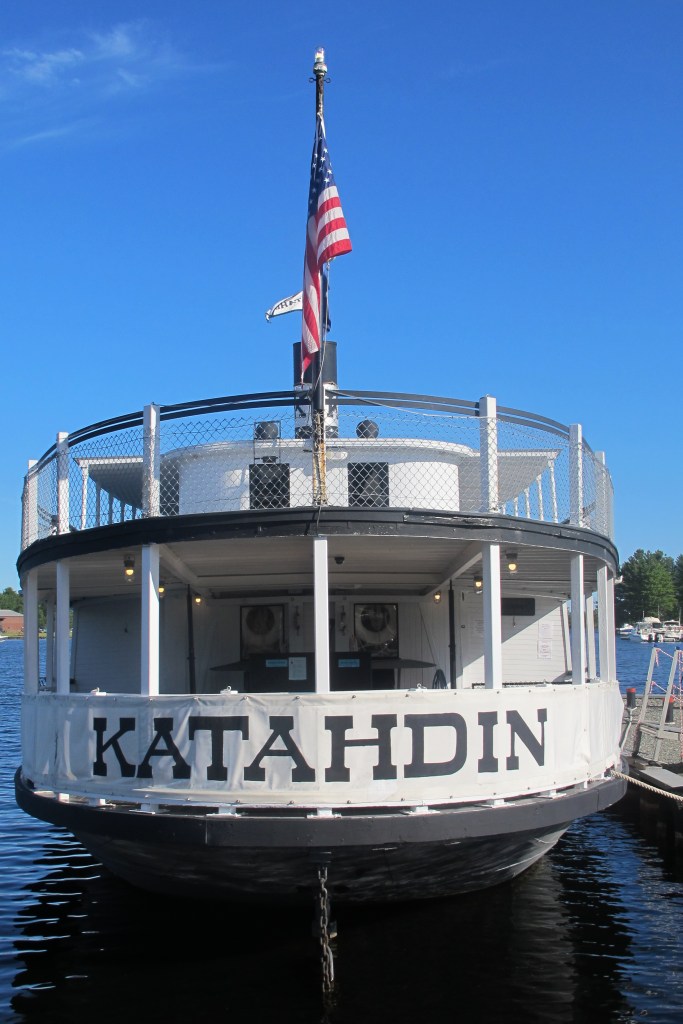
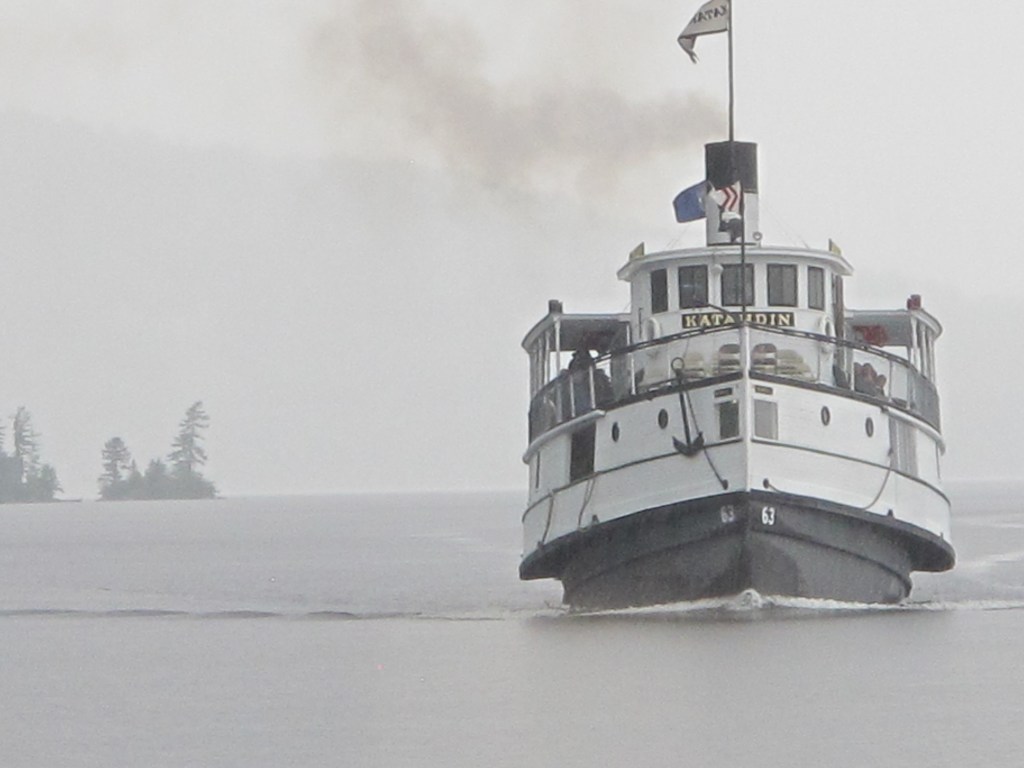
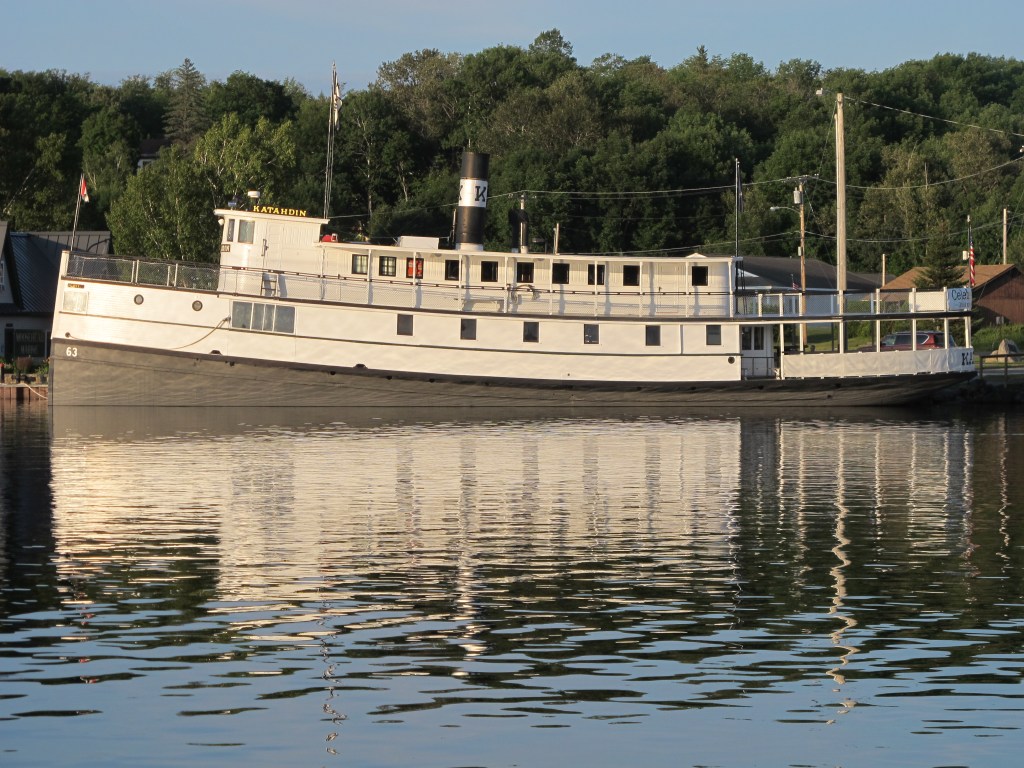

I have long been fascinated by the Kate. She is a black-and-white vision from another era, a regal presence on the lake. I love to watch her underway, her black-iron prow slicing through the water, bow raised high, smoke streaming from her smokestack. For a vessel that seems so large when you peer at her from the dock, she always seems surprisingly small on the big lake. Somewhat surprisingly, I have cruised aboard the ship only twice. The most recent time the captain even let me and my family take turns at the wheel. That was a blast.

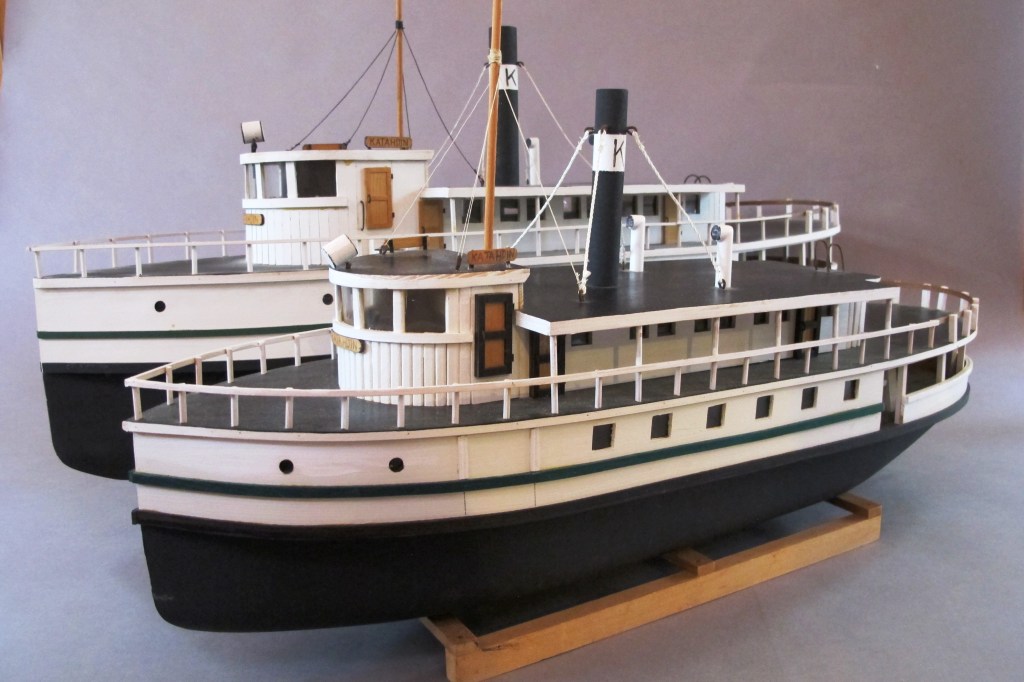
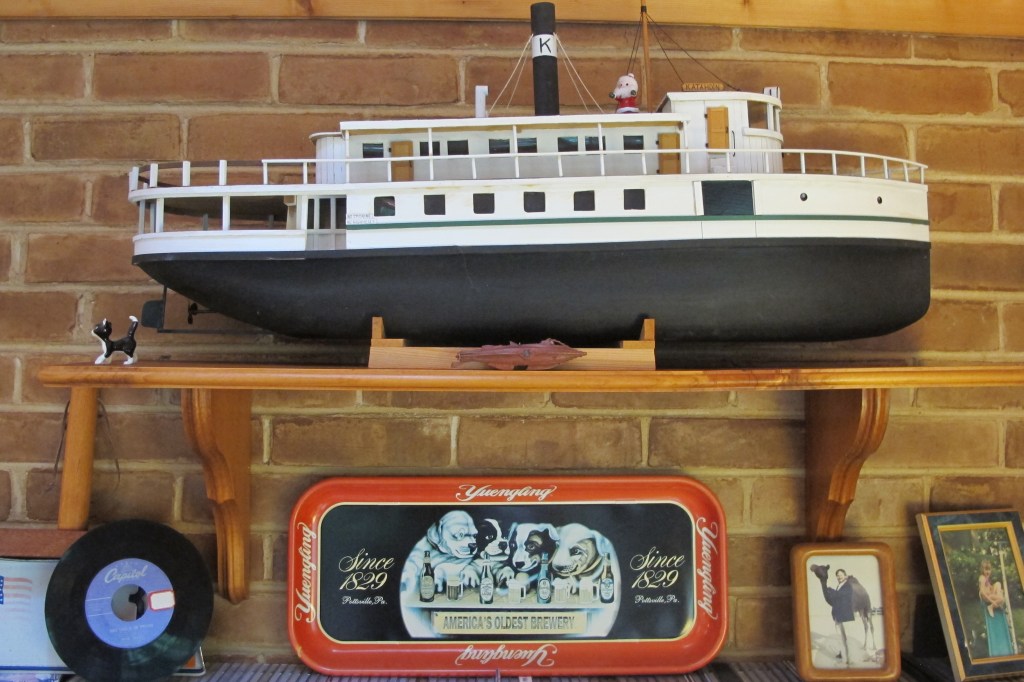
No matter where she is, the Katahdin is always photogenic. Every time I visit Greenville, I find myself compelled to take picture after picture of the venerable steamship. Several years ago, my wife got me a beautiful model of the Kate, built by a gentleman in Greenville. This year we found a slightly smaller version—obviously built by the same man—in an antique store in Hallowell and we bought it for my daughter and her fiancé, who had gotten engaged at Moosehead. Now we all have a little bit of Moosehead Lake in our Pennsylvania homes.
The log drives may have ended but the Katahdin endures.
 Maine at 200